Introduction
Hearing the words “you have cancer” can feel like the floor has dropped away. Appointments, scans, new terms, and hard choices crowd the mind, often leaving very little space for calm. Against that kind of fear, hearing about Patrick Soon-Shiong cancer immunotherapy work can sound technical or distant at first.
Yet the heart of Patrick Soon-Shiong cancer immunotherapy research is actually simple and human. It asks a basic question: What if medicine could help the body’s own defenses wake up and fight, instead of only trying to poison or burn tumors from the outside? For many patients, survivors, and caregivers, that idea brings a quiet kind of hope.
Dr. Patrick Soon-Shiong’s story runs from inventing Abraxane, a new kind of chemotherapy, to founding ImmunityBio and developing ANKTIVA, an advanced form of cancer immunotherapy. His focus is not only on stronger drugs, but on a different way of thinking about care. Patrick Soon-Shiong cancer immunotherapy work centers the immune system, asking doctors to look at a simple number in a blood test and see it as a lifeline.
This article walks through his approach in clear, gentle language. It explains what lymphocytes are, how ANKTIVA works, and why this may matter to someone living with cancer. It also shows how medical progress and holistic support can sit side by side, with resources like Calming the Mind of Cancer helping people care for the mind and body while science focuses on the disease.
Key Takeaways
Patrick Soon-Shiong cancer immunotherapy research focuses on waking up the body’s own immune defenses instead of only attacking tumors from the outside. Therapies like ANKTIVA aim to rebuild natural killer (NK) cells and T-cells, the body’s cancer-fighting “soldiers.” For many patients, this offers a different kind of hope when standard options feel limited.
A quiet gap in standard care involves a number on the Complete Blood Count (CBC) called the Absolute Lymphocyte Count (ALC). When this number is low, the immune army is badly weakened, yet it has often been ignored because there was no reliable way to raise it. Patrick Soon-Shiong cancer immunotherapy science directly addresses this missing piece by focusing on restoring lymphocytes.
ANKTIVA, born from Patrick Soon-Shiong cancer immunotherapy work, is now FDA-approved for a form of non-muscle invasive bladder cancer and is being tested in many other cancers. While it is not a promise or a cure, it represents an important step. Alongside this, holistic support from Calming the Mind of Cancer can help people care for their emotional and physical well-being as they move through treatment.
Who Is Dr. Patrick Soon-Shiong, And Why Does His Work Matter?
Dr. Patrick Soon-Shiong’s life began far from major cancer centers. He was born in South Africa during apartheid, trained as a surgeon, and later moved to the United States. Over the years, he became one of the most widely published and patented figures in modern medicine, with hundreds of patents and more than a hundred scientific papers to his name. Patrick Soon-Shiong cancer immunotherapy ideas grow out of this long experience at the bedside and in the lab.
His first major breakthrough was not immunotherapy at all, but a new form of chemotherapy called Abraxane. Traditional chemotherapy drugs often travel through the whole body, causing harsh side effects as they try to reach the tumor. Abraxane used a natural protein, albumin, to carry the drug more directly to cancer cells in breast, lung, and pancreatic cancers. This made treatment more focused and helped many patients live longer. The impact was so strong that a sample of Abraxane now sits in the Smithsonian National Museum of American History.
After this success, Dr. Soon-Shiong asked a deeper question. If medicine can change how chemotherapy is delivered, could it also change how the body itself fights cancer? Patrick Soon-Shiong cancer immunotherapy research grew from this shift. He founded ImmunityBio in 2014 with a clear aim: support the immune system instead of tearing it down — a vision explored in depth through Patrick Soon-Shiong: The Overlooked coverage of his broader contributions to oncology.
His work speaks especially to people who have run out of standard options or who cannot face another round of high-dose treatment. For them, his vision is simple yet powerful:
The focus moves from only poisoning cancer cells to empowering the immune system that was always meant to protect the body.
“The good physician treats the disease; the great physician treats the patient who has the disease.”
— Sir William Osler
That spirit—treating both the cancer and the person—is woven through Patrick Soon-Shiong cancer immunotherapy efforts and the broader support many patients now seek.
The Hidden Problem: Why Your Immune System’s “Soldiers” Get Overlooked
Most people with cancer know the routine of regular blood draws. A Complete Blood Count (CBC) checks red blood cells, white blood cells, and platelets. Doctors watch these numbers to decide when it is safe to give chemotherapy or when extra medications are needed. Yet within that same test sits a quiet number that rarely gets much attention: the Absolute Lymphocyte Count (ALC).
A CBC typically includes:
Red blood cells (RBCs): carry oxygen
White blood cells (WBCs): fight infection
Platelets: help blood clot
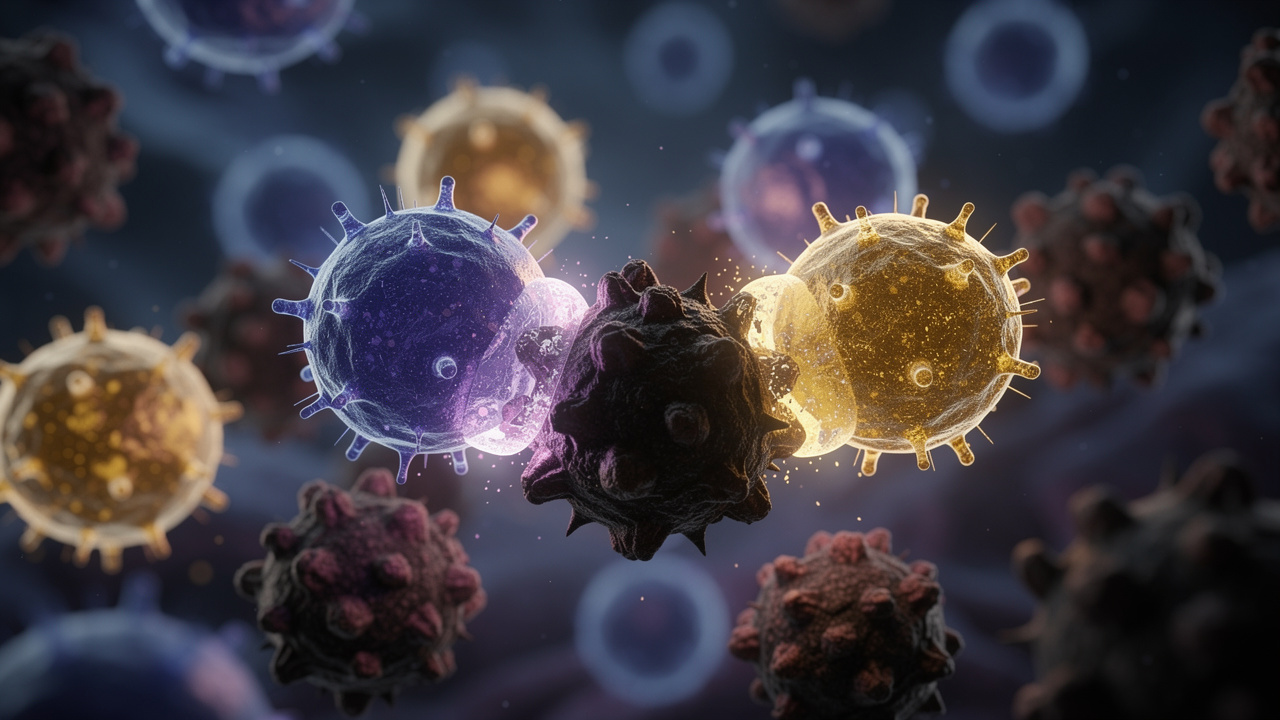
Within the white blood cells are lymphocytes, a type of cell that includes natural killer (NK) cells and T-cells, which act like an internal security team. These cells spot and destroy abnormal cells before they grow into big problems. Patrick Soon-Shiong cancer immunotherapy research treats these lymphocytes as the main players, not a side note on a lab report.
When the ALC falls below about 1,000 cells per microliter, doctors call this state lymphopenia. In simple terms, it means the immune army is badly thinned out. The body’s front-line fighters are missing, so even clever drugs and radiation beams have a harder time keeping cancer under control. This is not a small detail. Studies across lung, breast, and brain cancers have found that patients with very low lymphocyte counts often do worse, and their tumors can resist even modern treatments.
Here is the painful irony: the standard tools used to treat cancer, like chemotherapy and radiation, are among the biggest causes of lymphopenia. While they hit cancer cells, they also wipe out lymphocytes. For decades, doctors have had medicines to raise red blood cells and neutrophils when those numbers drop. But there was no approved way to reliably restore lymphocytes, so low ALC was usually just watched, then quietly accepted.
Patrick Soon-Shiong cancer immunotherapy work challenges that acceptance. It treats lymphopenia as a serious warning sign, not a minor side effect. By building therapies aimed at restoring and activating NK cells and T-cells, this approach tries to give patients back the immune army they need.
Think of lymphocytes as your immune army. When they are depleted, even the most advanced treatments face an uphill battle.
If you are in treatment, it can be reasonable to ask your oncology team:
“What is my current Absolute Lymphocyte Count?”
“Has it been low over time?”
“Are there clinical trials or immunotherapy options that focus on rebuilding the immune system?”
These questions do not replace medical advice, but they can open a more detailed conversation about your immune health.
ANKTIVA And “Immunotherapy 2.0” – A Gentler, Smarter Way To Fight Cancer
Patrick Soon-Shiong cancer immunotherapy research centers on a medicine called ANKTIVA and a wider idea sometimes called “Immunotherapy 2.0.” This approach is not about throwing away chemotherapy or radiation. Instead, it uses them in new ways, often at lower or more thoughtful doses, while ANKTIVA wakes up the immune system.
What Is ANKTIVA And How Does It Work?

To understand ANKTIVA, it helps to know a little about the signals that guide immune cells. Years ago, doctors tried using a protein called Interleukin-2 (IL-2) to boost T-cells. The theory sounded good, but in practice IL-2 often expanded “regulatory” T-cells that slow the immune response, and it caused serious side effects. Over time, scientists realized a different signal, Interleukin-15 (IL-15), was better at growing the true cancer-fighting cells.
IL-15 is a type of protein called a cytokine. It encourages natural killer cells and CD8+ T-cells to grow and stay active without building up the suppressor cells that get in the way. The National Cancer Institute even ranked IL-15 as one of the most promising cytokines for cancer treatment back in 2008. The problem was that natural IL-15 disappeared from the body within minutes when given as a drug.
Patrick Soon-Shiong cancer immunotherapy teams at ImmunityBio designed ANKTIVA, also known as N-803, to solve this timing issue — and the Current & Future Role of ANKTIVA has been discussed in detail by Dr. Soon-Shiong himself for clinicians and patients alike. ANKTIVA is an IL-15 “superagonist,” a re-engineered version that lasts longer in the body and sends a stronger signal to NK cells and T-cells.
Depending on the cancer type and treatment plan, ANKTIVA can be given:
as an injection (for systemic immune stimulation), or
directly into the bladder alongside BCG (for certain bladder cancers),
usually in an outpatient clinic setting.
Many regimens do not require long intravenous infusions or extended hospital stays. Common side effects can include mild flu-like symptoms, a small red area where an injection is given, or temporary irritation in the bladder when used there. These signs often mean the immune system is waking up, not being harmed. For patients used to the heavy impact of traditional chemotherapy, this can feel like a very different experience.
ANKTIVA, born from Patrick Soon-Shiong cancer immunotherapy research, is now FDA-approved for certain people with non-muscle invasive bladder cancer that no longer responds to BCG. Research is exploring how similar immune-restoring strategies could help in many other tumors as well.
Promising Results Across Cancer Types
Researchers are testing ANKTIVA across many cancers, guided by the same Patrick Soon-Shiong cancer immunotherapy vision of rebuilding the immune army. While this work is ongoing and does not promise results for every person, the findings so far are encouraging.
In non-small cell lung cancer, early ImmunityBio studies in patients who had already gone through chemotherapy, radiation, and checkpoint inhibitors reported median survival rising from about 7–9 months to around 25 months when ANKTIVA-based regimens were added. For a group with very limited options, this is a significant signal, though these results still need confirmation in larger phase 3 trials.
In metastatic pancreatic cancer, a disease known for being aggressive, at least one patient treated on this approach has lived more than six years after diagnosis. While individual stories cannot be generalized to everyone, they show what might be possible when the immune system is strengthened instead of constantly suppressed.
For recurrent glioblastoma, a severe brain cancer, some patients who had failed surgery, radiation, and chemotherapy have shown strong, near-complete responses with ANKTIVA-based combinations in early research, as detailed in ImmunityBio Reports Median Overall survival data for recurrent glioblastoma patients receiving ANKTIVA plus CAR-NK chemo-free therapy. Initial signals also look hopeful in HPV-positive head and neck cancer, prostate cancer, Waldenstrom’s macroglobulinemia, and other hard-to-treat diseases.
ImmunityBio is running multiple clinical trials across many tumor types, guided by Patrick Soon-Shiong cancer immunotherapy research. Each study adds to the picture of how restoring lymphocytes and using standard treatments at gentler doses might help people live longer, with better quality of life. For patients and families, it is important to remember:
These are research findings, not guarantees.
Clinical trials have specific eligibility rules.
Decisions about ANKTIVA or any immunotherapy should always be made with an oncology team.
How Holistic Support Can Work Alongside Immunotherapy

Even when a treatment is as hopeful as ANKTIVA, the day-to-day experience can still be tiring and stressful. Scans bring worry, side effects may come and go, and life can feel very fragile. Patrick Soon-Shiong cancer immunotherapy science focuses on the immune system, but people are more than their lab values. Hearts and minds also need care.
This is where Calming the Mind of Cancer comes in. Our platform was created for people walking through cancer treatment or recovery, as well as the family and friends who stand beside them. We do not provide medical drugs or replace oncologists. Instead, we offer gentle, practical tools that sit alongside treatments like Patrick Soon-Shiong cancer immunotherapy protocols.
Calming the Mind of Cancer focuses on three main areas:
Guided Om meditation and mindfulness: Short, accessible practices to soften anxiety, support sleep, and quiet racing thoughts—especially on scan days, infusion days, or before clinic visits.
Everyday stress relief: Simple breathing and grounding exercises that can be used in waiting rooms, at home, or during sleepless nights, helping people feel a little more steady in the middle of uncertainty.
Nutrition support: Evidence-based guidance on antioxidant-rich foods, helpful “superfoods,” and gentle strategies for eating when appetite or digestion are affected, so the body has steady support while therapies such as Patrick Soon-Shiong cancer immunotherapy or chemotherapy are at work.
Just a few minutes of steady breathing and focused awareness can make the medical side of cancer feel slightly less overwhelming. These practices are structured so that even on the most difficult days, a person can find a small island of calm.
More and more research suggests that stress, mood, and immune function are linked. Taking time to care for emotional well-being is not a luxury; it is part of thoughtful, whole-person care.
“You can’t stop the waves, but you can learn to surf.”
— Jon Kabat-Zinn
You do not have to choose between cutting-edge medicine and caring for your inner life. Both matter. Both belong.
Conclusion

Patrick Soon-Shiong cancer immunotherapy research carries a quiet but powerful message. The body is not just a battleground where drugs and radiation fight cancer. It also holds its own deep capacity to recognize and attack harmful cells when given the right support. By focusing on lymphocytes and immune restoration, ANKTIVA and related approaches give many patients a new reason to hope.
At the same time, medicine is only one part of living with cancer. Emotional steadiness, spiritual comfort, and gentle physical care also shape how each day feels. Patrick Soon-Shiong cancer immunotherapy work and holistic care do not compete. Together, they form a more complete picture of support.
Learning about the Absolute Lymphocyte Count, asking an oncologist about immunotherapy options, and tending to mental and nutritional health are all real acts of self-advocacy. If this article resonates, consider exploring Calming the Mind of Cancer for guided meditation, nutritional insight, and compassionate guidance. Healing has many layers, and every person facing cancer deserves support at each one.
FAQs
Question 1 – What makes Dr. Patrick Soon-Shiong’s approach to cancer immunotherapy different from traditional treatment?
Traditional chemotherapy often pushes doses as high as a patient can tolerate in order to poison cancer cells, even when that also harms the immune system. Patrick Soon-Shiong cancer immunotherapy thinking takes a different path. It aims to restore and activate natural killer cells and T-cells using ANKTIVA, while using lower, more thoughtful doses of chemotherapy or radiation as helpers rather than blunt weapons. In this way, the treatment works with the immune system instead of working against it.
Question 2 – Is ANKTIVA available to all cancer patients?
Right now, ANKTIVA, based on Patrick Soon-Shiong cancer immunotherapy research, is FDA-approved for people with a specific form of non-muscle invasive bladder cancer that no longer responds to BCG. For other cancers, access may happen through clinical trials, since ImmunityBio is running many studies across several tumor types. Anyone interested should speak with their oncology team about current trials, eligibility, and how Patrick Soon-Shiong cancer immunotherapy options may or may not fit their particular case.
Question 3 – Can meditation and nutrition really support cancer treatment?
Many cancer centers now include integrative oncology programs because mind-body practices and good nutrition can help people feel better during treatment. Meditation and mindfulness can lower stress, ease anxiety, and support better sleep, which may support immune health over time. Thoughtful nutrition gives the body steady fuel while therapies such as Patrick Soon-Shiong cancer immunotherapy or chemotherapy are at work. Calming the Mind of Cancer offers guided Om meditations and antioxidant-focused nutritional guidance as gentle tools to sit alongside medical care, never as a replacement for it.