When my mother was diagnosed with cancer, the diagnosis did not enter her life alone. It entered the lives of everyone who loved her.
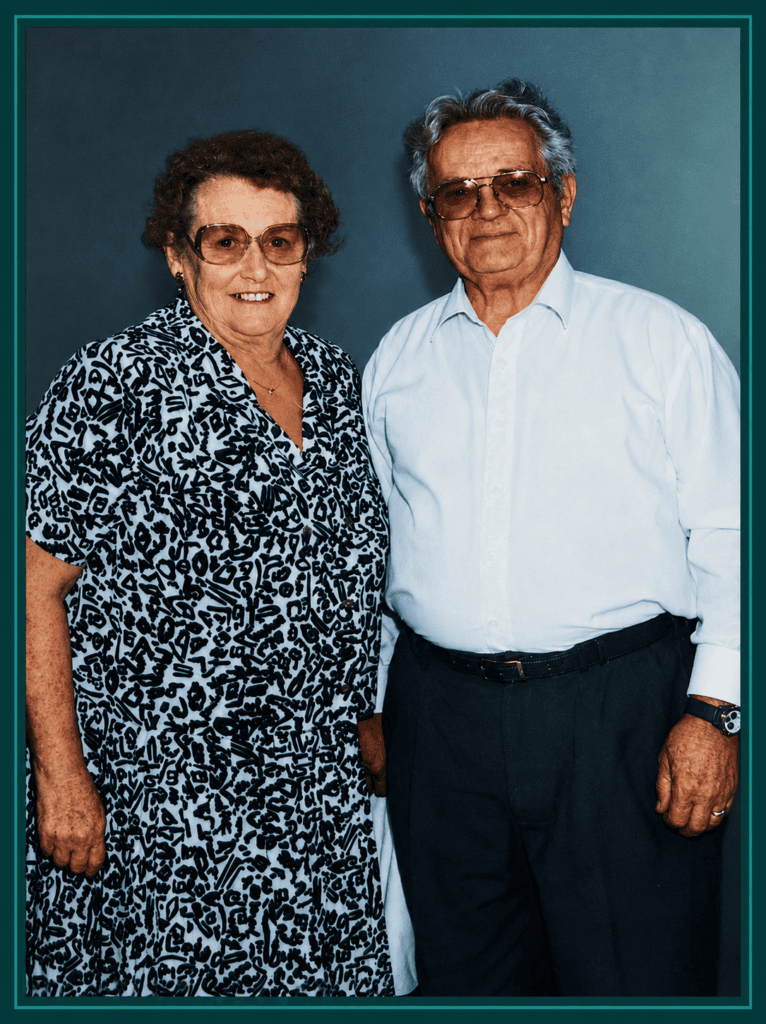
We lived through the fear, the anguish, the uncertainty and the terrible possibility of losing someone who meant so much to us. My mother followed the conventional path placed before her, and ultimately, we lost her.
That experience remained with me.
It left me believing that we had been given only part of the story. The disease had been addressed medically, but far less attention had been given to the whole person living with it—to her food, movement, emotional world, state of mind, daily environment, metabolic health, sense of agency and capacity to participate actively in her own wellbeing.
I cannot prove what might have happened if I had known then what I know now. I cannot claim scientifically or statistically that my mother’s outcome would have been different.
But I believe it may have been.
That belief comes not from theory alone, but from what happened approximately fifteen years later, when my father came home and told me that he had prostate cancer.
My response was immediate:
“Good. Let’s fix it.”
I was not claiming that I could cure his cancer or guarantee what would happen next.
I meant that we were not going to surrender our agency.
We were going to take charge of everything that remained within his influence. We were going to learn, ask questions, make changes and help him become an active participant in his own health.
We were not going to make decisions from fear, resignation or only half the available story.
My father adopted a ketogenic diet as a central part of that response. Through that change in the way he ate, he lost approximately 25 kilograms.
He exercised. He spent more time outdoors and in the sun. He addressed his weight, his habits, his daily behaviour and his mindset. He became positive, purposeful and actively involved in what happened next.
At the same time, he remained in communication with his doctor and oncologist and continued under medical care.
During this combined period, his PSA—which had been extremely high—fell dramatically and became very low. He remains under treatment and observation.
No honest person can claim with certainty that one diet, one treatment, one professional or one decision was solely responsible for that outcome. We cannot scientifically separate each part of what occurred and award all the credit to one side.
It would be wrong to claim that lifestyle alone produced the result. It would also be wrong to claim that lifestyle, mindset, weight loss, movement and active participation played no meaningful part simply because they occurred alongside medical care.
What I can say with certainty is that my father did not remain passive.
He changed his food.
He changed his body weight.
He changed his movement and daily habits.
He changed the way he thought about his situation.
He became informed, involved and purposeful.
He took charge of the areas of life that were still his to influence.
With my father, we achieved the kind of outcome I had desperately hoped for with my mother: a dramatic improvement, a life still being lived, and the opportunity to continue moving forward.
That does not prove that the same actions would have changed my mother’s outcome. No honest person could make that claim.
But I believe that if I had known then what I know now, her story may have unfolded differently.
I cannot go back and give my mother the knowledge, choices and support that I wish we had understood at the time.
But I can help make sure that other people and families are not left feeling that they were given only part of the story.
That belief became one of the foundations of Calming the Mind of Cancer.
Too often, people feel that the cancer conversation begins and ends with the medical investigation and treatment of the disease.
Calming the Mind of Cancer exists to help provide the other essential part of the story: the human, emotional and lifestyle dimensions of living with cancer.
It explores nutrition, movement, sleep, sunlight and the natural environment, emotional wellbeing, stress regulation, positive action, relationships, psychoneuroimmunology, epigenetically informed lifestyle thinking, and the profound importance of becoming an active participant in one’s own life.
This does not require rejecting medical care.
It means refusing to believe that medical care is the only area in which meaningful action can occur.
The medical team remains present—monitoring, advising and providing appropriate care—but the person living with cancer remains at the centre.
The person is not merely a diagnosis.
The person still has choices.
The person can ask questions, learn, move, rest, nourish the body, address harmful habits, strengthen relationships, calm the nervous system and create a more supportive internal and external environment.
We cannot promise control over every outcome.
But we can help people recognise what remains within their influence—and give them the calm, knowledge, structure and encouragement to act upon it.
In a very real sense, that is what my father did.
He calmed the mind of cancer.
Calming the Mind of Cancer was created for the person who has received the diagnosis and for the people who love and support them.
It is a place to pause before fear takes command.
A place to ask better questions.
A place to learn about the whole person—not only the disease.
A place to create a personal map for what comes next.
Its purpose is to help people move from helplessness toward participation, from confusion toward understanding, and from feeling that cancer has taken control of everything toward recognising that meaningful areas of life still remain within their power.
I could not go back and change the story we lived with my mother.
But through Calming the Mind of Cancer, I can help others encounter a broader story—one informed by evidence, strengthened by action and guided by love.