Introduction
Angiogenesis is the natural process through which the body forms new blood vessels. It is essential for growth, healing, and repair. In cancer, however, this same process can be drawn into helping tumors survive and expand by supplying them with oxygen and nutrients. That is why angiogenesis has become an important area of research for both cancer treatment and supportive lifestyle strategies.
This has led scientists to ask whether certain foods and plant compounds may help support a healthier balance in the body’s angiogenic signaling. The idea is not that food can cure cancer or replace medical care, but that nutrition may influence some of the biological terrain in which disease develops and progresses. For people affected by cancer, this offers a more grounded and useful question than hype or fear: how might everyday food choices become one small part of a broader, whole-person approach to care?
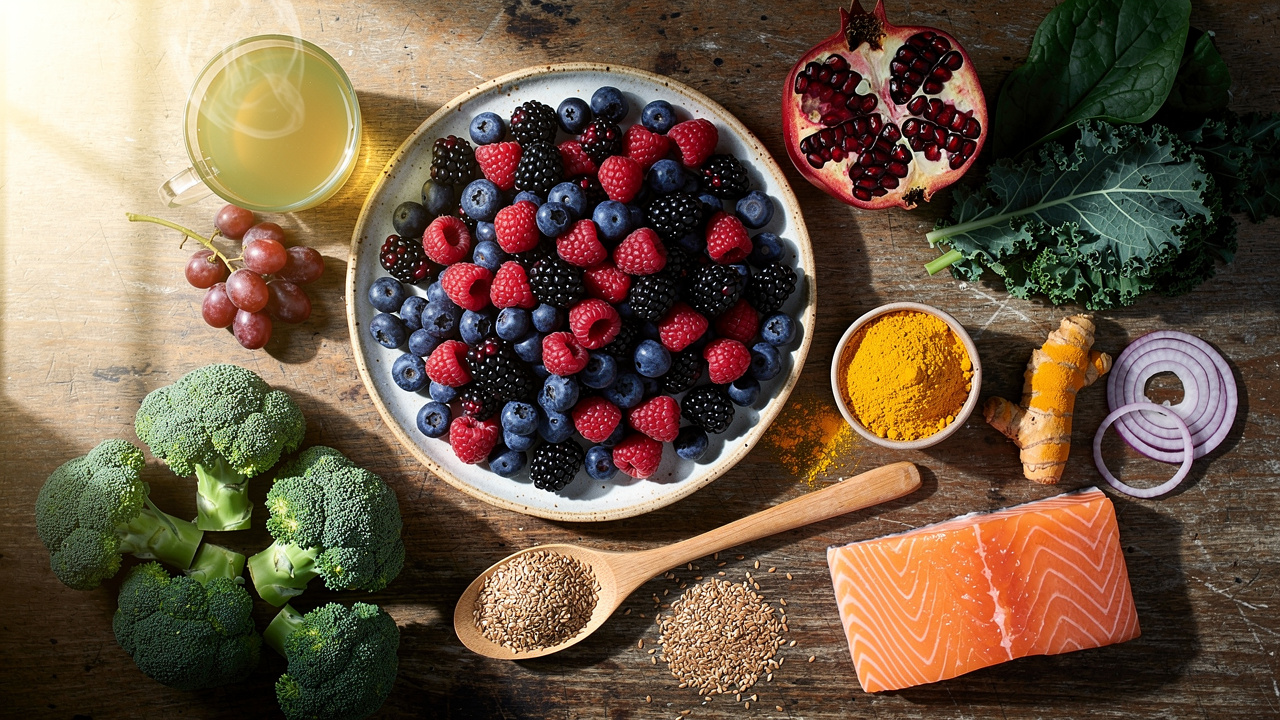
This is where interest in angiogenesis foods cancer begins. Scientists are studying whether certain plant compounds might gently support the body’s own ability to keep blood vessel growth in a healthy range. Food is not a cure and never a stand‑alone treatment. Yet it can be one part of a whole‑person approach that includes medical care, stress support, and spiritual grounding. In this article, we will explore what angiogenesis is, how it connects to cancer, what research says about foods that might influence this terrain, and how Calming the Mind of Cancer weaves nutrition and mindfulness into a compassionate framework.
Key Takeaways
It can help to have the main ideas in mind before going deeper. These points give a simple map of what this guide on angiogenesis foods cancer will cover.
-
Cancer And Blood Vessel Growth Are Closely Linked. The body constantly balances blood vessel growth, and cancer can push this process out of balance so tumors gain a stronger blood supply. Researchers see this as one reason why the biology of angiogenesis matters for cancer care and prevention.
-
Plants Provide Anti-Angiogenic Compounds. Many plants contain compounds that have shown anti‑angiogenic activity in lab and population studies, and this is where interest in angiogenesis foods cancer mainly comes from. These include pigments, antioxidants, and healthy fats that gently support the body’s own defenses.
-
Everyday Foods Can Fit This Pattern. Foods most often studied include berries, cruciferous vegetables, tomatoes, green tea, turmeric, onions, leafy greens, soy, and omega‑3‑rich fish, all of which can fit into everyday meals. A pattern of eating that features many of these items appears more helpful than focusing on only one food.
-
Diet Is One Tool, Not A Cure. Diet works best as one tool among several, alongside medical treatment, stress reduction, movement, and sleep, especially when thinking about angiogenesis foods cancer. It is important to talk with an oncology team before making large changes to eating patterns during treatment.
Many oncology clinicians remind their patients that “food is one helpful part of cancer care, never a replacement for medical treatment.”
What Is Angiogenesis — And Why Does It Matter In Cancer?
Angiogenesis is the body’s natural way of growing new blood vessels. These tiny vessels act like delivery roads, carrying oxygen and nutrients to every cell and helping remove waste. The process is vital for healing cuts, repairing tissues, and supporting growth and reproduction. In a healthy adult, angiogenesis stays under tight control, turning on only when needed and then turning off again.
The body manages this by balancing two kinds of signals. Some signals tell blood vessels to grow, such as VEGF and bFGF, while other signals tell them to stay quiet. When this balance holds, blood vessels develop only where they are needed. This delicate control is one reason why scientists see angiogenesis as a key part of our natural defense system.
Cancer cells, however, can push this system in their favor. A tiny tumor, about the size of a pinhead, can survive for quite some time without its own blood supply. To grow larger, it must flip what many researchers call the angiogenic switch. The cancer cells start making large amounts of growth signals, overwhelming the natural brakes. New, fragile vessels then grow into the tumor, feeding it and giving cancer cells a path into the bloodstream.
Once that vascular network forms, the tumor can grow much faster and may spread to other organs. Modern oncology has developed drugs that block some of these blood vessel signals, which shows how central angiogenesis is to cancer treatment. Physicians such as Dr. William Li describe this as tapping into the body’s own anti‑angiogenesis defense. This same idea has inspired interest in angiogenesis foods cancer, as people ask whether everyday foods might gently support those defenses alongside medical care.
The Science Behind Anti‑Angiogenic Foods

The idea that food might help keep microscopic tumors in a quiet, harmless state is sometimes called angioprevention. In simple terms, it suggests that certain natural compounds in food could help the body resist the angiogenic switch. Many plant chemicals that researchers first studied as cancer‑preventive now appear to work in part through anti‑angiogenic pathways.
Most of the strong evidence for angiogenesis foods cancer comes from scientific research. Researchers look at several types of evidence when they talk about anti‑angiogenic foods:
-
Laboratory studies. In dishes and animal models, compounds from tea, berries, turmeric, cruciferous vegetables, and other plants can block vessel growth signals, calm inflammation, or slow down the movement of endothelial cells that form new vessels.
-
Population studies. Large population studies show that people who eat patterns rich in these foods tend to have lower rates of several cancers.
-
Human trials. Human clinical trials are fewer, but some small studies are encouraging. For example, green tea extracts have been studied in people with certain precancerous conditions, and pomegranate juice has been explored in men with recurrent prostate cancer.
These studies do not prove that a single food can control cancer, yet they support the idea that diet plays a meaningful background role.
Another important idea is bioavailability, which means how much of a compound the body can actually absorb and use. Lycopene from tomatoes, for instance, seems more available when tomatoes are cooked into sauce than when eaten raw. This is one reason why talking about angiogenesis foods cancer always needs nuance. Eating a serving of food is not the same as taking a drug dose of an isolated compound.
The most balanced takeaway is simple. There is real science behind anti‑angiogenic food compounds, and the research keeps growing. At the same time, food works best as one gentle, long‑term influence as part of a wider approach, not as a quick fix. For readers who want a broader view, the Calming the Mind of Cancer guide The Role of Nutrition in Cancer Prevention offers more detail on how daily eating patterns support health over time.
Nutrition researchers often remind people that “no single food or nutrient can control cancer; what matters most is the overall pattern of eating and living.”
Key Foods Studied For Their Anti‑Angiogenic Properties
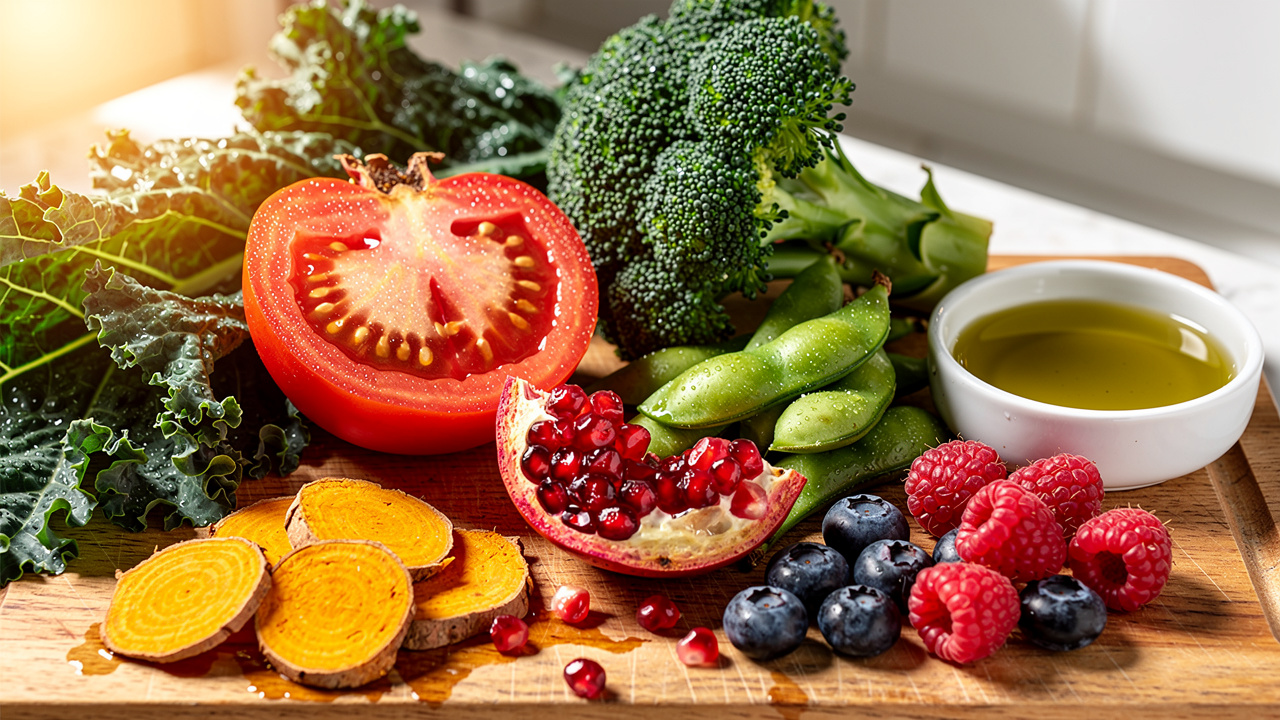
No single food stops cancer, and serious researchers do not claim that. Still, many everyday foods contain compounds that have been studied for supporting healthy blood vessel balance. When people search angiogenesis foods cancer, they are often looking for these kinds of options that can fit into regular meals rather than exotic products.
-
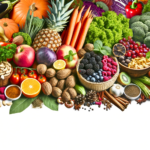
Berries and colorful fruits offer deep reds, blues, and purples that come from pigments called anthocyanins, along with ellagic acid. In lab and animal studies, these compounds have helped lower levels of VEGF, a key signal that drives abnormal vessel growth. Raspberries, blackberries, blueberries, strawberries, pomegranate, and red grapes often appear on lists of angiogenesis foods cancer because of this research base. Enjoying a daily cup of mixed berries or a glass of diluted pomegranate juice can be a simple way to bring these pigments onto the plate.
-
Cruciferous vegetables such as broccoli, kale, Brussels sprouts, cauliflower, and cabbage are rich in natural chemicals that turn into sulforaphane and indole‑3‑carbinol when chewed and digested. These compounds have been shown to nudge cancer cells toward self‑destruction and to quiet signals that tell new vessels to grow. People who eat more of these vegetables often have lower rates of several cancers in population studies. For anyone exploring angiogenesis foods cancer, adding a serving of steamed or lightly sautéed crucifers most days is a powerful yet gentle step.
-
Green tea is one of the most widely studied beverages in the context of angiogenesis foods cancer. It contains EGCG, a catechin that can block enzymes tumors use to break down tissue and invite in new vessels. Some human studies suggest that regular green tea drinking may slow the progression of certain high‑risk lesions. Sipping two to three cups of brewed green tea a day, as tolerated and approved by a medical team, can be an easy habit for many people.
-
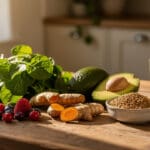
Turmeric and its active compound curcumin have shown strong anti‑inflammatory and anti‑angiogenic actions in lab work. Curcumin has been observed to turn down VEGF and other growth factors and to interfere with vessel‑forming structures. Small clinical trials suggest possible benefits in various precancerous conditions, although doses there are often higher than what food alone provides. When thinking about angiogenesis foods cancer, cooking regularly with turmeric and a pinch of black pepper, which can support absorption, is a gentle way to bring this spice into everyday dishes.
-
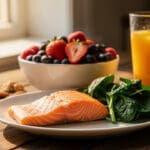
Omega‑3‑rich fish and flaxseeds supply healthy fats that may calm inflammation and support a more balanced vessel environment. Long chain omega‑3s from salmon, sardines, and mackerel appear to compete with more inflammatory fats that can drive angiogenic signals. Ground flaxseed adds plant omega‑3s and lignans that also support cell health. Including fatty fish a few times per week and sprinkling flaxseed on oatmeal or smoothies offers a practical way to bring angiogenesis foods cancer ideas into a weekly menu.
-
Onions, leafy greens, and soy foods provide flavonoids and isoflavones with interesting anti‑angiogenic activity. Quercetin from onions, kale, spinach, and parsley can slow down enzymes that help tumors invade. Genistein from traditional soy foods such as tofu, tempeh, and edamame has been linked to lower breast and prostate cancer rates in populations where soy is a regular part of the diet. When used in moderation under medical guidance, these foods can be meaningful pieces of an angiogenesis foods cancer pattern.
| Food Group | Key Compounds | Brief Focus |
|---|---|---|
| Berries & Colorful Fruits | Anthocyanins, Ellagic Acid | Vessel signaling and oxidation |
| Cruciferous Vegetables | Sulforaphane, Indole‑3‑Carbinol | Detox enzymes and cell health |
| Green Tea & Turmeric | EGCG, Curcumin | Inflammation and vessel enzymes |
For readers who want more practical kitchen guidance on angiogenesis foods cancer, Calming the Mind of Cancer offers the resource Foods That Fight Cancer Cells, A Practical Guide, which turns this research into simple meal ideas.
Beyond Diet — Lifestyle Factors That Also Shape The Terrain

Food is only one part of the internal terrain in which cancer grows or stays quiet. The same biology that makes researchers curious about angiogenesis foods cancer also helps explain why movement, stress, weight, and smoking status matter so much.
Regular physical activity encourages healthy, well‑organized blood vessel growth in muscles and the heart while lowering overall inflammation. This kind of balanced angiogenesis is very different from the chaotic vessel growth driven by tumors. Even gentle movement such as walking, light stretching, or chair exercises can support this healthier pattern when done consistently and cleared by a care team.
Chronic stress has a more hidden but powerful effect. When the body stays in fight‑or‑flight mode, stress hormones like norepinephrine stay high. Research shows these hormones can act on vessel cells and cancer cells, pushing them to release more angiogenic factors. This is one reason the mind‑body practices at the core of Calming the Mind of Cancer, such as meditation, guided imagery, and breathwork, are more than comfort alone. They may indirectly support the same terrain that people hope to influence with angiogenesis foods cancer.
Weight and smoking also play clear roles. Excess fat tissue behaves like a hormone‑secreting organ, sending out inflammatory and pro‑angiogenic signals, while smoking directly damages tissues and boosts VEGF production. Working toward smoke‑free living and a stable, gentle weight range is deeply supportive, even if those shifts take time. For a fuller picture of how food and daily habits work together, the Calming the Mind of Cancer article Beyond Treatment, Holistic Nutrition for Cancer Recovery offers an integrative view.
Conclusion
The body carries a quiet, ongoing wisdom in the way it grows and prunes its own blood vessels. Cancer tries to bend that wisdom, yet research suggests the terrain is not fixed. A pattern of eating that features many of the plant‑rich options often grouped as angiogenesis foods cancer may help support the body’s natural defenses while also nourishing energy, digestion, and mood.
It is important to keep food in its proper place. An anti‑angiogenic style of eating is a complementary strategy that walks alongside chemotherapy, surgery, radiation, and other physician‑directed care. It does not replace those treatments. Still, choosing what to eat with intention can feel like a grounded act of self‑care at a time when many things feel outside of personal control.
Before making major changes based on lists of angiogenesis foods cancer, speaking with an oncology team and a registered dietitian helps match ideas to each person’s treatment plan. Calming the Mind of Cancer is here to support that process with evidence‑based nutritional education, mindfulness practices, and spiritual tools. For gentle, practical inspiration, you might explore Healthy Recipes for Cancer Survivors, A Gentle Guide and use it as a starting point for nourishing, calming meals.
FAQs
What Is Angiogenesis In Simple Terms?
Angiogenesis is the natural process the body uses to grow new blood vessels. These tiny tubes carry oxygen and nutrients to every tissue and help wounds heal and organs repair themselves. Cancer can take advantage of this process by forcing extra vessels to grow into a tumor, which is why many people now ask how angiogenesis foods cancer ideas might support healthy balance.
Can Eating Certain Foods Really Affect Cancer Angiogenesis?
There is genuine scientific interest in the way plant compounds can influence vessel growth signals, inflammation, and cell behavior. In lab tests and population studies, patterns rich in foods often labeled as angiogenesis foods cancer appear to support the body’s own anti‑angiogenic defenses. Food does not act like a drug or cure, yet it can be one helpful factor among many. Anyone considering big dietary changes should talk with their oncologist or a registered dietitian first.
Which Foods Are Most Studied For Anti‑Angiogenic Effects?
Researchers often focus on green tea with its EGCG catechin, turmeric for curcumin, berries and pomegranate for anthocyanins and ellagic acid, and cruciferous vegetables such as broccoli for sulforaphane. Tomatoes provide lycopene, while omega‑3‑rich fish and soybeans add fats and isoflavones that also draw interest. Rather than chasing a single item from an angiogenesis foods cancer list, most experts encourage a varied, plant‑forward pattern.
Is An Anti‑Angiogenic Diet Safe During Cancer Treatment?
For many people, a whole‑food, plant‑rich pattern that overlaps with common angiogenesis foods cancer suggestions is both safe and helpful during treatment. It can support strength, digestion, and energy. However, certain compounds, especially in supplement form, may interact with specific drugs, and soy foods may need special discussion in some hormone‑sensitive cancers. This is why personalized guidance from an oncology team and dietitian is so important before making large shifts.